Stop treating AI like a person. Start treating it like a tool.
We often hear that AI is on the verge of doing "every job that requires intelligence." But what if we’re fundamentally misunderstanding what "intelligence" actually is?
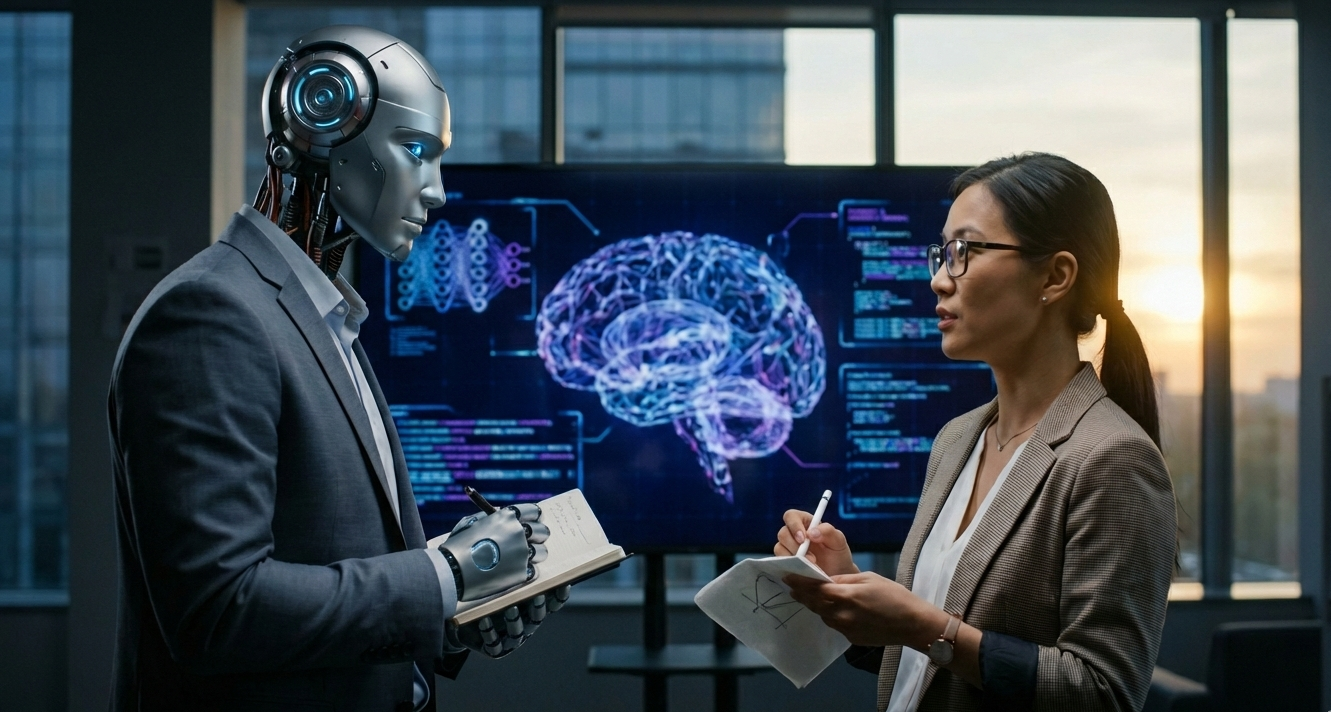
Here is a debate between Marcus, a tech entrepreneur invested heavily in the AI boom, and Dr. Sofia Chen, a computational philosopher.
While Marcus sees a world of exponential replacement, Dr. Chen offers a grounding perspective: AI doesn’t "know" things; it predicts the next likely piece of data. She compares AI to the arrival of Excel—it didn't replace accountants; it amplified them.
Key themes in this dialogue:
- Why "hallucinations" are a feature, not a bug.
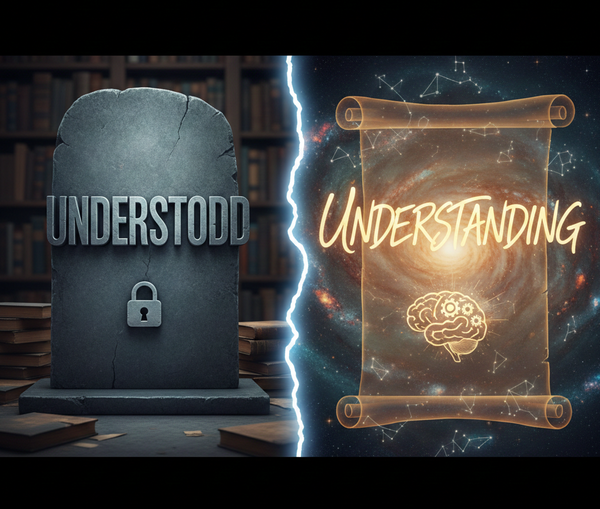
- The difference between pattern matching and genuine understanding.
- Why the "human-in-the-loop" isn't a temporary fix, but a structural necessity.
If you’re currently rethinking your AI roadmap or managing a team worried about displacement, this conversation is for you.
Marcus: Sofia, I have to say, I'm surprised you're so skeptical about AI. We're living through the most transformative moment in human history. Today AI can write, create images, understand speech—tomorrow it'll be doing every job that requires intelligence. Why can't you see that?
Dr. Chen: Marcus, I'm not skeptical about AI's capabilities. I'm skeptical about the narrative you just described. When you say AI will do "every job that requires intelligence," what do you actually mean by intelligence?
Marcus: Come on, that's obvious. Intelligence is problem-solving, pattern recognition, generating creative content, analyzing data. AI is already doing all of that, and it's getting better exponentially.
Dr. Chen: You've just described certain behaviors we associate with intelligence. But here's the crucial question: are we talking about genuine understanding or sophisticated simulation? Because the technologies underlying current AI—neural networks, large language models—they're fundamentally pattern-matching systems. They excel at statistical prediction, not comprehension.
Marcus: Does it matter? If the output is indistinguishable from human work, who cares about the mechanism?
Dr. Chen: It matters enormously when you're deciding where to deploy these systems. Let me give you an example. You mentioned AI can write. That's true—it can generate text based on prompts. But have you noticed that you still need a human to review that text? To distinguish between what's factually correct and what's a convincing-sounding fabrication?
Marcus: Sure, there are some hallucinations now, but that's a temporary problem. The next generation will fix that.
Dr. Chen: That's where your computational understanding needs to catch up with your enthusiasm. Hallucinations aren't a bug to be fixed—they're a fundamental feature of how these systems work. They're probabilistic, not deterministic. They don't "know" things; they predict likely token sequences based on training data.
Marcus: (pausing) Okay, but they're still incredibly useful. We're using AI in our company for everything from customer service to code generation.
Dr. Chen: And those can be excellent applications—with proper supervision. Think about it like Excel. When spreadsheets arrived, did they eliminate accountants?
Marcus: No, but they made them vastly more productive.
Dr. Chen: Exactly. Accountants got a tool for amplification, not replacement. They still needed to understand accounting principles, exercise judgment, catch errors. The spreadsheet didn't understand debits and credits—it just computed what it was told to compute. AI is similar. It amplifies certain human capabilities, but the human expertise and oversight remain essential.
Marcus: You're making AI sound so limited. What about medical diagnosis? AI is already outperforming doctors in detecting certain conditions.
Dr. Chen: In specific pattern-recognition tasks like analyzing radiology images, yes. But notice what you said—"detecting," not diagnosing. AI can help doctors with initial screening, flag anomalies for review. That's valuable. But you cannot use it for unsupervised medical applications. The doctor still needs to integrate that information with patient history, clinical context, differential diagnosis, and treatment decisions. Would you want an AI making autonomous medical decisions about your health?
Marcus: (hesitating) Well, no, but—
Dr. Chen: That hesitation tells you something important. You intuitively understand that these systems can't replace human judgment in high-stakes situations. And that's not because the technology is immature. It's because these systems fundamentally cannot do what you're asking them to do.
Marcus: So you're saying they'll never reach human-level intelligence?
Dr. Chen: The present and foreseeable AI technologies cannot reach what we'd meaningfully call human intelligence, no. They can simulate certain intelligent behaviors, but simulation isn't the same as the thing itself.
Marcus: That seems like philosophical hair-splitting.
Dr. Chen: Is it? Let me ask you this: would you implement an AI system to run a critical business process that requires deterministic, predictable behavior based on truly understanding the concepts involved?
Marcus: (thinking) We tried that actually, for contract analysis. We had to pull it back because it kept missing crucial clauses and sometimes hallucinated terms that weren't there.
Dr. Chen: Exactly. Because you needed determinism—consistent, reliable interpretation based on genuine understanding. AI isn't suited for that. It's probabilistic by nature. Sometimes that's fine, even beneficial. But when consistency is non-negotiable, you've got a fundamental mismatch.
Marcus: Okay, I see your point about deterministic applications. But what about creativity? AI is writing poetry, composing music, generating art.
Dr. Chen: It's remixing and recombining patterns from its training data in statistically novel ways. That can be interesting, even useful. But can it engage in truly creative autonomy? Can it generate genuinely new concepts that break from existing patterns? Can it do what a visionary scientist does—imagine something that doesn't exist yet and work toward making it real?
Marcus: Not yet, but—
Dr. Chen: Not yet, and not with these technologies. Creative autonomy, the ability to conceptualize something genuinely new rather than recombine existing elements—that's a different kind of intelligence than pattern matching. Think of it like an automobile.
Marcus: An automobile?
Dr. Chen: Yes. A car amplifies human mobility. You can travel farther and faster than on foot. But the car doesn't decide where to go or why. It doesn't navigate complex ethical choices about the journey. The driver remains essential. AI amplifies certain cognitive tasks the same way—processing information faster, identifying patterns across large datasets. But it doesn't replace the human judgment needed to set direction, evaluate meaning, or exercise creative autonomy.
Marcus: (leaning back) So you're saying I should think of AI as a tool, not as an intelligent agent?
Dr. Chen: Yes. A powerful tool for amplification, but one that requires human supervision, judgment, and responsibility. When you treat it as a tool, you can identify genuinely valuable applications. When you treat it as nascent human intelligence, you end up making bad investments and creating unnecessary anxiety.
Marcus: I have to admit, half our AI projects aren't delivering what we promised. And my team is terrified they'll be replaced.
Dr. Chen: That's the cost of the hype. CEOs invest in solutions to problems AI can't actually solve. Workers panic about displacement that isn't coming in the way they fear. Politicians and journalists amplify the confusion because they haven't done their homework to understand what the technology actually can and cannot do.
Marcus: So what should I tell my team?
Dr. Chen: Tell them the truth. AI is a tool that will change how they work, just like Excel changed how accountants work. Some tasks will be automated or accelerated. But their expertise, judgment, and creative thinking aren't being replaced. If anything, those become more valuable because they're what the AI cannot do.
Marcus: And what about our investment strategy?
Dr. Chen: Focus on applications where AI genuinely adds value through amplification with oversight. Text generation with human review. Pattern detection supporting expert analysis. Automation of repetitive cognitive tasks. Avoid applications that demand determinism without understanding, or unsupervised operation in high-stakes domains, or truly creative autonomy.
Marcus: (smiling ruefully) You know, I came here expecting you to rain on my parade.
Dr. Chen: I'm not against AI, Marcus. I'm against misunderstanding it. When we're clear about what it is and isn't, we can use it thoughtfully to extend human capabilities. When we're confused, we waste resources and cause unnecessary harm. Understanding the technology—really understanding it—is the only responsible path forward.
Marcus: I think I need to rethink some of our roadmap.
Dr. Chen: That's not defeat, Marcus. That's wisdom. And unlike an AI, that's something you can genuinely develop.