Moving my blog

I`m in the process of moving my blog to a new hosting provider and a new blogging platform, Ghost. In the next few weeks I'll be copying all the post to the new platform.
I`m in the process of moving my blog to a new hosting provider and a new blogging platform, Ghost. In the next few weeks I'll be copying all the post to the new platform.

"Calculemus!", The Error of a Genius In the late 1600s, Gottfried Wilhelm Leibniz made a promise that should sound familiar to anyone following today's AI. Leibniz was arguably one of the most universal intellect Europe ever produced: co-inventor of calculus, pioneer of formal logic, builder
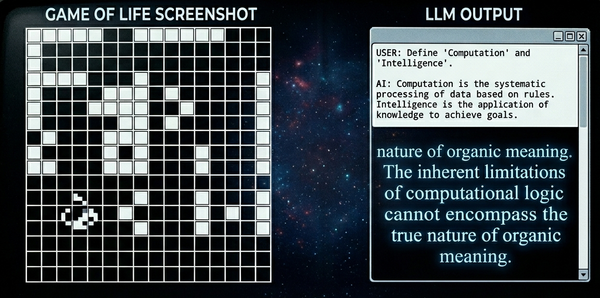
We are living a grand illusion. As we watch Large Language Models (LLMs) draft essays, write functional code, and converse with poetic nuance, we operate under a quiet, dangerous assumption: that if we just stack enough parameters, compute cycles, and training text high enough, true understanding and intent will eventually

When you say "I am cold," you aren't just describing your temperature. You are picking a side in a centuries-old philosophical war, one that perfectly explains why the tech world is currently tearing itself apart over whether AI can truly "reason." There is

Is AI becoming more human, or are we discovering just how much of our "intelligence" is actually uncritical reflexive thought? In this dialogue, a skeptical look at our new "LLM Oracles" reveals an unsettling truth: for most of us, the Turing Test has been inverted. We